
Skip to Content


A web application agnostic to collection methods and data!


The Data Discover application has this

day of a library of 161 collectors,

allowing you to automate the collection of your data in less than 30 minutes!


Coming soon: Watch a demo​​​

Set up your collection

Feel free to modify the content as you wish. You do not need to know a technical and complex programming language. Our intuitive tools will guide you.

Fill in the prerequisites

You will always find the ideal choice tailored to your needs. From the basic website created with our attractive templates to the bespoke website reflecting your company's values.

ETL Multi Sources K&D

The backbone of your IT data: connect, normalise, consolidate… and deliver usable data

Votre IT produit énormément de données, mais elles sont éparpillées, hétérogènes et souvent contradictoires : Active Directory, Intune/SCCM, VMware, Azure/AWS, ITSM/CMDB, antivirus/EDR, outils de vulnérabilités, IAM, fichiers Excel…

Résultat : on passe trop de temps à corriger et réconcilier, pas assez à piloter.

L’ETL Know & Decide a été conçu pour régler ce problème à la source :

alimenter vos référentiels avec une donnée fiable, cohérente et traçable, automatiquement, en continu, sans dépendre d’un seul outil.

Dans l’IT, la donnée n’est pas “propre” par défaut :

  • Les mêmes actifs existent sous plusieurs identités (noms différents selon les outils)
  • Les référentiels sont incomplets (champs vides, informations non tenues à jour)
  • Les sources se contredisent (propriété, statut, OS, modèle, localisation…)
  • Les exports changent, les APIs évoluent, les formats ne sont pas stables
  • Et surtout : le réel bouge (postes réinstallés, VMs recréées, comptes renommés, licences réaffectées…)

Un ETL orienté IT doit donc faire plus que “charger des lignes” :

il doit comprendre la structure, normaliser, réconcilier, tracer, expliquer et industrialiser.

Our ETL quickly connects your IT sources (APIs, exports, connectors, scheduled or ad-hoc imports) to retrieve usable datasets without turning the project into a construction site. It then harmonises everything to the same standard (formats, labels, conversion dictionaries, cleaning of inconsistencies) in order to obtain readable and reliable data.

Where value is truly created is in multi-source consolidation: merging, deduplication, "source of truth" rules, key reconciliation (hostname, serial, UUID, etc.) and cross-enrichment to produce a unique view per asset. Once consolidated, the data feeds your repositories (inventory, CMDB, management) and your KPIs, while remaining exportable for business, finance, security, or audit purposes.

Finally, the whole process is continuously industrialised (recurring executions), with complete historical tracking and traceability, to move from a snapshot to sustainable management.

Fleet management requires the collection of heterogeneous data

Data collection

A solution that meets your challenges

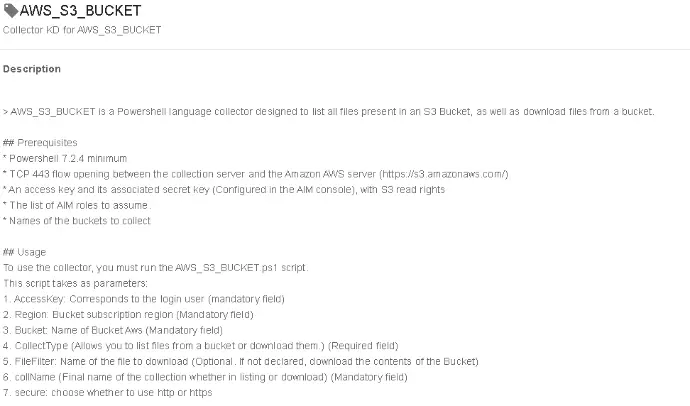
Our platform consolidates all your data sources, whether they are technical (Active Directory, SCCM, antivirus, hypervisors, Azure cloud, AWS…), management-related (SAP, invoices, fixed assets), or derived from external files (Excel, PDF). With a scheduled local application and over 100 ready-to-use collectors, your data is centralised and made reliable.

You thus benefit from a comprehensive discovery and overview of your CIs and all the essential attributes for the effective management of your fleet. 


Discovery of your CIs

How many servers, workstations, or applications do you actually have in your information system?

The answer almost always depends on the source you consult. Active Directory, CMDB, antivirus, monitoring tools, SCCM, Airwatch or Satellite… each provides a partial view and the discrepancies are often quite significant.

If you have never compared, on the same day, the figures from your different solutions, we invite you to do so: you will be surprised by the differences between auto-discovery, AD, the CMDB, and the technical consoles.

The only way to obtain a clear and reliable view is to consolidate all your data sources. This approach allows you to identify all the CIs present in at least one source, to spot those that exist everywhere (therefore validated) and, conversely, to highlight those to be decommissioned.

The more integrated sources there are, the greater the accuracy of the inventory. By adding, for example, your asset files or your supplier invoices, you can not only enhance the reliability of your inventories but also verify the consistency between your costs (maintenance, outsourcing...) and the reality of your fleet.

With this approach, you transform fragmented and sometimes contradictory data into a unique, consolidated, and actionable vision, which becomes the foundation for effective management and sustainable cost reduction.

Organiser une démo

Supervision of the data processing workflow


The quality of an inventory does not solely depend on the sources you consult!

But also of the process that orchestrates their collection and transformation. The supervision of the workflow ensures that each step of the data processing is carried out correctly, from the execution of the collections to the availability of the consolidated information.

Specifically, this means continuously checking that the collections are being carried out according to the defined schedule, that the formats meet the expected standards, and that the received data does not contain any anomalies. Empty fields, duplicates, or inconsistencies are thus detected immediately, preventing their propagation in inventories and dashboards.


By applying this vigilance at all stages of the process, you gain in reliability, consistency, and traceability. Your data is not only collected but also controlled and validated before being utilised. This provides you with a clear and consolidated view, on which you can base your analyses and decisions with complete confidence.

Organiser une démo


From theory to practice

Are you wondering how our solution integrates into your environment? Discover a realistic implementation scenario, step by step. From data collection to consolidation, through quality control and the establishment of dashboards, we show you how to turn theory into tangible results.